Looking for a quieter suburb that still keeps Boston within easy reach? If you want tree-lined streets, village charm, and fast commuter access, Westwood should be on your list. You will get a small-town feel, strong civic amenities, and two commuter-rail options to make weekdays manageable. In this guide, you will learn how Westwood is laid out, what commuting really looks like, where people go for everyday needs, how schools are organized, and what to expect from the housing market. Let’s dive in.
Why Westwood stands out
Westwood is a suburban town in Norfolk County with a classic small-town character and strong regional connections. It sits just outside Greater Boston along the Route 128 and I‑95 corridor, which helps many residents balance quiet living with city access. You will find a few compact village centers rather than one big downtown, plus a modern retail and transit hub that anchors the east side of town.
According to the U.S. Census, Westwood had 16,266 residents in 2020, with a 2024 estimate near 16,533. That scale keeps day-to-day life calm compared to denser inner suburbs. For a quick town overview and history, see the general profile of Westwood, Massachusetts.
If you are comparing suburbs, note that Westwood has been planning for housing and station-area growth with active municipal work. You can review the town’s current Housing Production Plan to see how leadership approaches future needs.
Everyday amenities and centers
Westwood offers several small, walkable nodes plus one larger convenience center. Each serves a different daily need.
Town Center on High Street
The High Street and Nahatan Street area reads like a traditional New England center. You will see civic buildings, the public library, and local services in a compact setting. It is the spot many residents think of when they say Westwood has a small-town heart.
Islington village
Islington clusters around the Islington commuter-rail stop on the Franklin Line. The village has neighborhood-scale services and quick train access for daily commuting. If you prefer a quieter boarding point into Boston, the Islington station is a practical choice.
University Station and Route 128 area
On the east side, University Station combines newer housing with major retail and everyday conveniences. This area caters to easy grocery runs, fitness, and errands in one place. It is also adjacent to the Route 128 rail hub, which makes it a strategic location for frequent train users.
Schools and learning
Westwood Public Schools operate four elementary schools — Downey, Pine Hill, Martha Jones, and William E. Sheehan — plus Thurston Middle School and Westwood High School. You can find school contacts and program notes through the district’s pages, beginning with the Downey School site.
For performance and accountability, the Massachusetts Department of Elementary and Secondary Education (DESE) classifies Westwood High as not requiring assistance or intervention in the 2024 report. You can view details, including MCAS indicators and advanced coursework participation, on the DESE accountability page for Westwood High. Always confirm the latest district and state updates if school performance is a key factor in your move.
Private and independent options include Xaverian Brothers High School, a boys school for grades 7–12 located in Westwood. Explore its mission and programs on the Xaverian Brothers High School site.
Commute and access
If you split time between home and the city, Westwood gives you multiple paths into Boston and beyond.
- Highways: Westwood sits along I‑95 and the Route 128 corridor, which provides direct access to much of Greater Boston as well as points south and west.
- Commuter rail: The Route 128 station at University Avenue serves both MBTA’s Providence/Stoughton Line and Amtrak services, with a large parking garage used by commuters and intercity travelers. Learn more about the hub at the Route 128 station page.
- Neighborhood rail: The Islington station on the Franklin Line offers a smaller-scale option into South Station and Back Bay. Some residents prefer this for a more local boarding experience.
Train schedules and drive times vary by time of day and season. Check current MBTA and Amtrak timetables close to your travel date, and plan extra time for peak-hour traffic on I‑95.
Parks, trails, and open space
One reason Westwood feels calmer than its location suggests is the amount of conserved land and trails. Hale Reservation is a widely used regional resource with extensive trails and shorelines that support education and recreation. Around town, you will also find a network of conservation parcels such as Baker, Rock Meadow Brook, Rice Reservation, Mulvehill, Buckmaster Pond, and The Pits.
For maps and permitted uses, see the Town’s Conservation Land inventory. If you value quick nature walks, you will have options in nearly every part of town.
Housing styles and neighborhoods
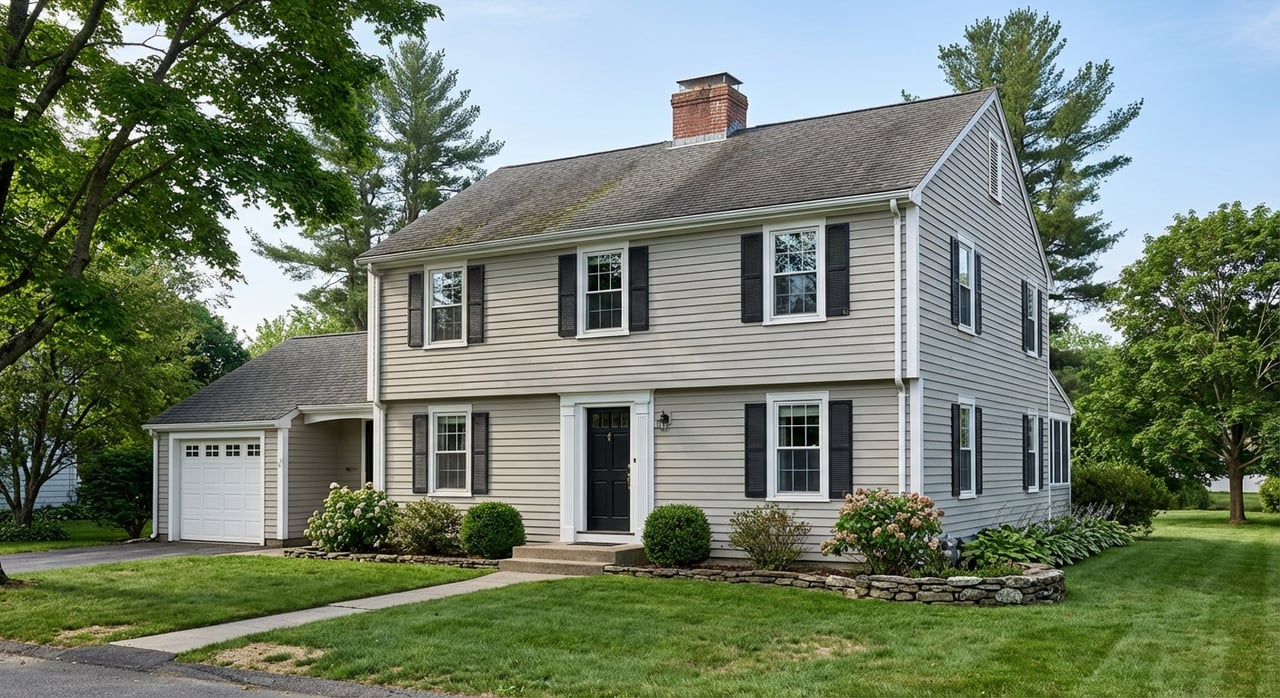
Westwood’s housing stock skews to owner-occupied single-family homes, including colonials, capes, ranches, and mid-century styles, with some newer construction near major corridors. You will also find pockets of condos and multifamily near University Station and select arterial roads.
Owner occupancy is high, around 87 percent based on recent Census estimates. That share often signals longer-term residency and steady neighborhood rhythms. The Census also lists a median value for owner-occupied housing units near $1,041,500, which places Westwood in a higher price tier within Greater Boston. For a quick reference, review the town’s figures in Census QuickFacts.
Market snapshot and what it means
Different data sources use different methods, so you will see variation in reported home values:
- The Census American Community Survey shows a median value for owner-occupied homes around $1,041,500. This is a multi-year, survey-based estimate.
- Zillow’s Home Value Index recently placed the typical Westwood home near $1.18 million. This is a smoothed estimate across the entire stock.
- Monthly median sale prices reported by portals can swing lower or higher in a given month due to small sample sizes. For example, a recent January snapshot showed a median around $830,000.
These numbers can be useful for orientation, but the best read on current pricing comes from the latest MLS data for active, pending, and closed sales in your target price band. If you are preparing to buy, request a hyper-local comp set for the specific school area or micro-neighborhood you prefer. If you are selling, ask for a pricing strategy that weighs condition, time-on-market trends, and seasonal buyer demand.
Who Westwood fits
- You want a small-town feel with village centers and conservation land.
- You need reliable commuter choices, including a major rail hub and a neighborhood station.
- You prefer mostly single-family neighborhoods with pockets of newer condos near retail and transit.
- You value public school options with clear, accessible performance reporting through DESE, plus private alternatives.
Buyer tips for Westwood
- Start with the commute: test both stations and the Route 128 drive during your likely travel window.
- Tour the three main nodes: Town Center, Islington, and University Station. Each offers a different daily rhythm.
- Get local comps: ask for recent MLS data in your target streets, then check how condition and updates affect value within similar floor plans.
- Walk the trails: spend time at nearby conservation areas to confirm the outdoor access you want.
Seller tips for Westwood
- Prep for first impressions: light updates and clear staging help in a market with many well-kept homes.
- Use micro-neighborhood comps: price against the most similar homes in your immediate area, not just the town-wide median.
- Highlight commute and conservation: many buyers prize the rail options and outdoor access that set Westwood apart.
- Consider your timeline: if you need speed and certainty, discuss both a traditional MLS sale and an as-is cash option to choose the best fit for your goals.
The bottom line
Westwood offers a blend that is hard to find: a small-town center, a neighborhood-scale village with its own train stop, a modern retail and transit hub, and a strong network of parks and trails. With high owner occupancy and a housing stock centered on single-family homes, the town attracts people who want space, stability, and practical access to Boston. If that balance fits your lifestyle, Westwood is worth a close look.
When you are ready, connect with Edward Gaeta for local guidance. You can get a free market valuation for a traditional sale or request a 24-hour as-is cash offer, then choose the path that fits your timing and goals.
FAQs
Is Westwood, MA a good suburb for Boston commuters?
- Yes. You get I‑95/Route 128 access plus two rail choices: the Route 128 hub with MBTA and Amtrak service and the neighborhood-scale Islington station on the Franklin Line.
What are Westwood’s main village centers?
- The Town Center along High Street, the Islington village near the Franklin Line station, and the larger University Station area that combines retail, housing, and the Route 128 rail hub.
How are public schools organized in Westwood?
- The district includes four elementary schools, one middle school, and Westwood High. DESE’s accountability report shows Westwood High does not require assistance or intervention in 2024.
What home styles are common in Westwood?
- Mostly single-family homes, including colonials, capes, ranches, and mid-century designs, with newer condos and multifamily near University Station and along major corridors.
What do homes cost in Westwood right now?
- Census data places the median value for owner-occupied homes near $1.04 million. Portal estimates vary by method and month, so ask for an MLS-based comp set for the most current picture.
Where can I find parks and trails in Westwood?
- Hale Reservation is a major regional resource, and the town maintains many conservation parcels like Baker, Rock Meadow Brook, Rice Reservation, and Buckmaster Pond. The Town’s Conservation Land page has maps and guidelines.
