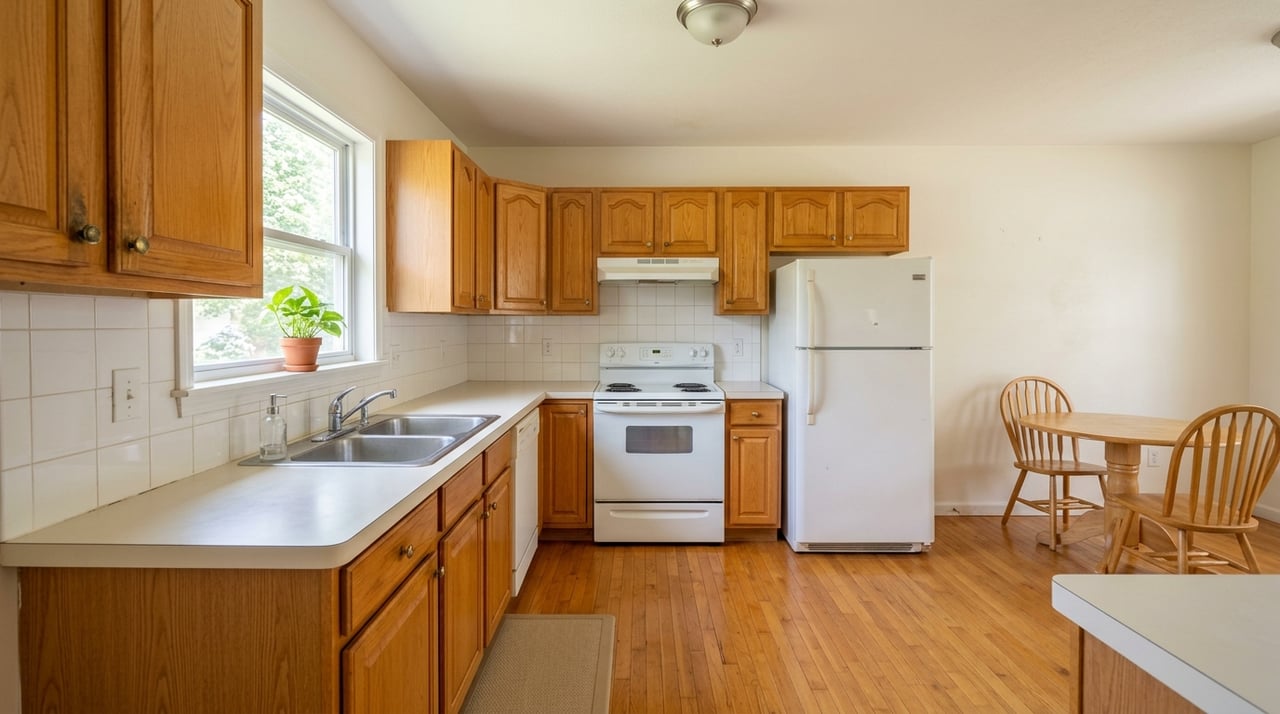
Wondering whether your dated Westwood home is worth fixing before you sell? You are not alone. Many owners want to know if they should invest in updates, list the home as-is, or take a faster private sale and move on. In a high-value market like Westwood, the right answer usually comes down to net proceeds, timing, and how much stress you want to take on. Let’s break down how to think it through.
Westwood market conditions matter
Westwood is a strong housing market by almost any measure. Redfin’s May 2026 snapshot shows a median sale price of $1,147,313, a median of 20 days on market, a 104.3% sale-to-list ratio, and 63.5% of homes selling above list.
That kind of demand can help an outdated home attract interest, especially if the location, lot, and layout still work for today’s buyers. But buyers in a competitive market also notice deferred maintenance quickly, and that can affect offers, inspection negotiations, and repair credits.
Westwood also has high home values and meaningful carrying costs. With the FY26 residential tax rate at $12.87 per $1,000, annual property taxes work out to about $14,766 on a home valued at $1,147,313. If your sale is delayed by repairs, staging, or back-and-forth negotiations, those extra holding costs can matter.
Focus on net proceeds
When you sell an outdated home, the biggest mistake is comparing only the top sale price. A higher offer does not always mean more money in your pocket.
Instead, compare your likely net from each path after prep costs, carrying costs, concessions, and time. In Westwood, where prices are high and market activity is strong, even a discounted as-is offer can compete with a traditional listing once you account for repairs, staging, taxes, and the risk of post-inspection credits.
What to compare
Look at each option through these factors:
- Upfront repair or cleanup costs
- Time needed before the home hits the market
- Expected days on market
- Buyer inspection risk
- Potential repair credits or price reductions
- Ongoing taxes and utility costs while you hold the home
- Whether the sale may trigger Massachusetts withholding rules for sales of $1,000,000 or more
Option 1: Make light updates and list
For many Westwood sellers, this is the best middle path. If your home is structurally sound, the main systems are working, and the issue is mostly cosmetic, modest improvements may help you present the home better without over-improving.
The goal is not to create a brand-new house. The goal is to improve first impressions, reduce buyer objections, and let the market compete for the property.
Updates that often make sense
The research points to visible, high-signal improvements instead of a full renovation. In New England, projects such as garage door replacement, steel entry door replacement, fiber-cement siding replacement, and a minor kitchen remodel showed stronger resale recoup than major upscale remodels.
That matters if you are trying to decide between spending a little and spending a lot. In many cases, a targeted prep budget is easier to justify than a major kitchen or bath overhaul right before selling.
Simple prep steps that help
Staging does not have to mean renting designer furniture. Basic listing prep often includes:
- Cleaning thoroughly
- Decluttering rooms and storage areas
- Depersonalizing the space
- Handling small repairs
- Refreshing worn or tired-looking features where practical
These steps can help buyers see the home more clearly. In a competitive market like Westwood, that can improve how the home shows online and in person.
When this path fits best
A light-update listing strategy may be the right fit if:
- You want to maximize sale price
- You have time to prepare the home properly
- The home’s condition issues are mostly cosmetic
- You are comfortable with showings and open market exposure
- You can handle some inspection negotiation if it comes up
Option 2: Sell as-is on the open market
Selling as-is does not mean the home will not sell. It means you are telling buyers you do not plan to make repairs before closing.
This approach can work well when the home needs updating, but you still want MLS exposure and the chance to attract buyers who are comfortable taking on the work. In Westwood, some buyers may accept cosmetic issues if they like the setting, lot, or long-term upside.
What as-is really means
An as-is sale can still involve negotiation. Buyers may still inspect the property, raise concerns, or ask for credits depending on what they find.
So if your home has aging systems, deferred maintenance, or older finishes, you should plan for some pushback on price or terms. The benefit is that you avoid taking on the repairs yourself before listing.
Disclosures still matter
In Massachusetts, as-is does not let you skip key legal requirements. For residential one-to-four unit sales, buyers must receive a separate written home-inspection disclosure before or at the first purchase contract, and a buyer can choose to forego inspection only after the proper disclosures and without coercion.
Massachusetts guidance also says a seller’s agent must disclose known material defects they actually know about. Residential sellers who are not in the business of selling homes generally do not have an affirmative duty to disclose defects except for lead paint requirements, but known material issues still need careful handling through the transaction.
Option 3: Take a fast cash sale
Sometimes speed and certainty matter more than squeezing out the highest headline price. If you are dealing with an inherited house, urgent relocation, divorce, probate, or a property that needs a lot of work, a cash sale may be worth serious consideration.
Cash buyers often close faster because there is no financing contingency and no appraisal requirement. Realtor.com also cited a 2025 national analysis showing sellers accepted an average 9% discount on all-cash purchases compared with financed offers.
That discount sounds large at first, but the real question is your net. In Westwood, a private cash offer may still compare well once you subtract repair work, prep time, taxes, utilities, and likely concessions from a traditional sale.
When a cash sale may make sense
A fast as-is cash sale may be a better fit if:
- The home needs significant cosmetic or systems work
- You want to avoid repairs and cleanup
- You need a predictable timeline
- You want fewer showings and less disruption
- You prefer convenience over trying to maximize gross price
Edward Gaeta’s business model is especially useful here because you do not have to force your situation into one path. You can compare a full-market listing strategy against a private as-is cash option and choose the one that fits your goals.
Westwood issues to check before selling
Outdated homes often come with extra details that can affect timeline, cost, and buyer confidence. In Westwood and Massachusetts, a few issues deserve early attention.
Lead paint rules for older homes
If your home was built before 1978, Massachusetts requires a Property Transfer Lead Paint Notification before a purchase and sale agreement, lease with option to purchase, or foreclosure memorandum. If you own an older home, make sure this is addressed early so it does not slow the deal later.
Septic or sewer status
If the property uses a septic system, MassDEP says it should be inspected when buying or selling. If it is connected to Westwood sewer, the town requires written approval for sewer connections and operates a public wastewater system.
This is one of those details that can shape buyer questions right away. Knowing whether the home is on septic or sewer, and what documentation may be needed, helps you prepare for a smoother sale.
Massachusetts withholding rules
For sales of $1,000,000 or more, Massachusetts requires a Transferor’s Certification and Form NRW, and withholding may apply to certain nonresident sellers or businesses without a continuing Massachusetts presence. Since Westwood’s typical sale price is around $1.1 million, this issue is especially important here.
If your transaction may cross that threshold, it is smart to confirm how it affects your expected net before you choose your selling path. That way, you are making a decision based on real numbers, not assumptions.
How much should you spend?
There is no universal number, but the research supports a practical rule: spend where buyers notice it first. Cleanliness, curb appeal, basic repairs, and selective visible updates usually make more sense than a major remodel right before selling.
If your kitchen is dated but functional, a minor refresh may be enough. If your front door, garage door, siding, or obvious wear make the home feel neglected, those may be better places to invest.
The strongest prep plan is usually the one that matches your timeline and your likely buyer. If the house is basically solid, light improvements may help you earn more. If the house needs broad work and you want a clean exit, spending less and selling as-is may protect your net better.
A simple decision framework
If you are unsure which route to take, start here:
Choose light updates and list if
- The home is dated but functional
- You have time to prepare it
- You want to aim for the highest market exposure
- You can tolerate some uncertainty during inspection and negotiation
Choose as-is on the market if
- You want broad buyer exposure without doing much work
- The home’s condition is likely to reduce buyer enthusiasm
- You are willing to price honestly from day one
Choose a private cash sale if
- You need speed or certainty
- The home needs major work
- You want to avoid repairs, showings, and extended prep
- Life circumstances make convenience the top priority
In Westwood, all three paths can work. The best one depends on what matters most to you: price, speed, convenience, or reducing risk.
If you want help comparing your options, Edward Gaeta can walk you through both sides of the equation, from a full-service listing strategy to a fast as-is cash sale, so you can choose the path that fits your goals.
FAQs
How hard is it to sell an outdated home in Westwood, MA?
- Westwood’s market is competitive, with a median 20 days on market and many homes selling above list in May 2026, so an outdated home can still attract buyers if it is priced and presented honestly.
What repairs matter most before selling a dated home in Westwood, MA?
- The research supports focusing on visible, high-impact improvements such as cleaning, decluttering, small repairs, curb appeal, and selective updates rather than a full luxury renovation.
Can you sell a home as-is in Massachusetts and skip disclosures?
- No. Massachusetts requires a separate written home-inspection disclosure for residential one-to-four unit sales, and other required disclosures may still apply, including lead paint rules for pre-1978 homes.
What if your Westwood home was built before 1978?
- You will likely need to complete the Massachusetts Property Transfer Lead Paint Notification before the purchase and sale agreement if the home was built before 1978.
What if your Westwood property has a septic system?
- If the property uses septic, MassDEP says it should be inspected when buying or selling, so it is smart to confirm the system status early in the process.
Does a $1 million-plus home sale in Massachusetts affect your net proceeds?
- It can, because sales of $1,000,000 or more require a Transferor’s Certification and Form NRW, and withholding may apply to certain sellers, so this should be reviewed as part of your net sheet.
